
The Fullness of Time

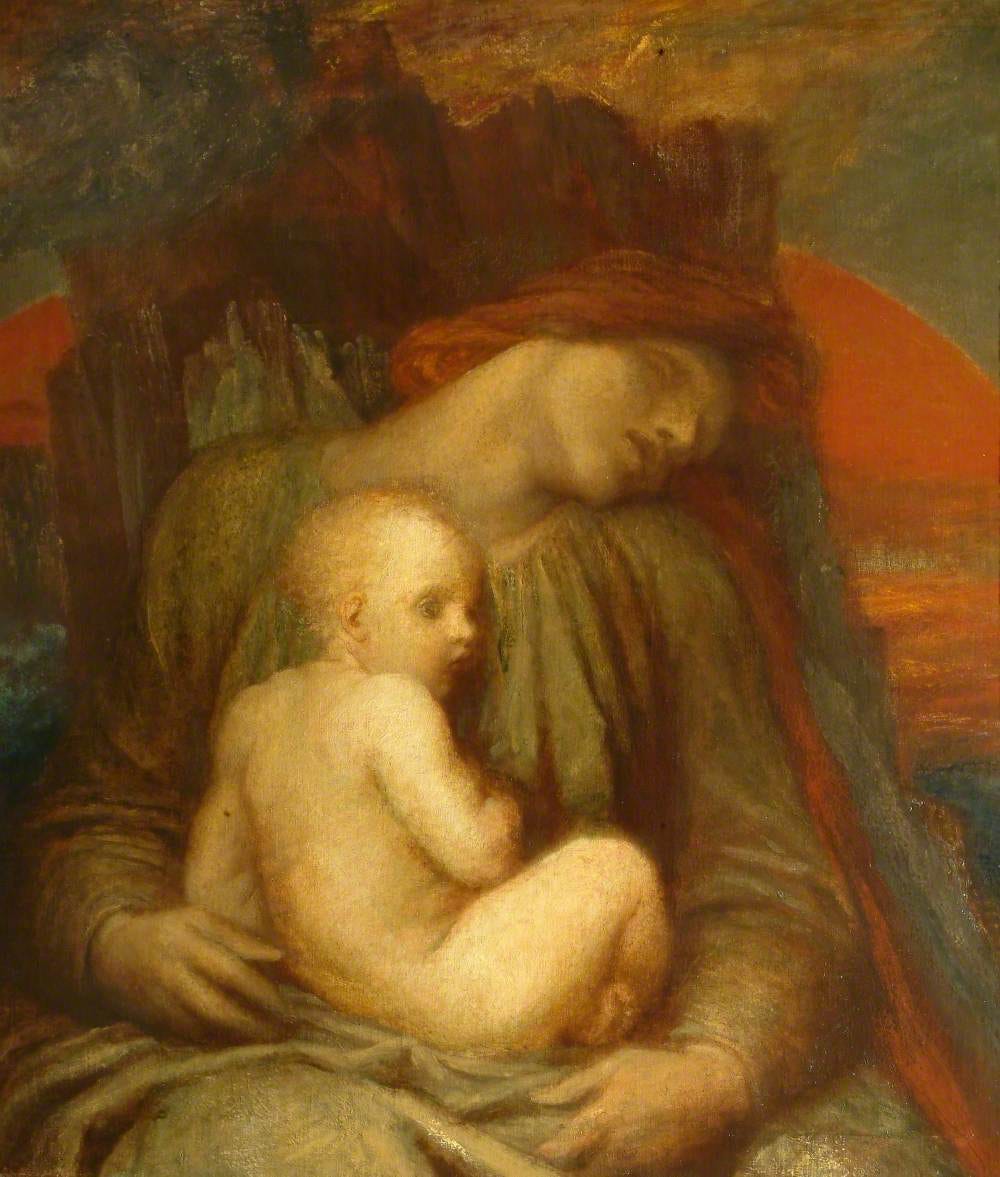
George Frederick Watts, “The Slumber of Ages” (1901)
Late in time, behold Him come
Offspring of a virgin’s womb
Veiled in flesh the Godhead see
Hail th’ incarnate Deity
Pleased as man with man to dwell
Jesus, our Emmanuel.— “Hark, the Herald Angels Sing”
I do not have much time to write this month (end of the semester, encroaching holidays, etc.), but I did want to share two Christmas-related concepts that have been cropping up in my work on existentialism and education.
The first is Paul Tillich’s discussion of kairos. When the word appears in Aristotle’s Nicomachean Ethics, it means “the good in the category of time”—that is, our perception of the eternal good within the contingency of worldly events—which offers a normative basis for practical judgment and comparison. As Tillich writes, for Aristotle, “everything and every action can have its good moment, which is not given before or after but only en kairo, in the right moment.” However, he continues, “time as such has no kairos for Aristotle, because the world process as a whole has no good and no perfection. The ultimate good is above it, not in it, and does not appear in any special moment.”
That would change with the advent of Christianity. For Tillich (drawing from the apostle Paul), kairos means “the fullness of time”: a new beginning or new birth in the person of Jesus Christ. As Paul puts it, “When the fullness of the time was come, God sent forth his Son, made of a woman, made under the law, to redeem them that were under the law, that we might receive the adoption of sons” (Galatians 4:4-5). It is the irruption of the eternal into human existence, Tillich writes, that “divides history into a period of preparation and of reception, creating a center of history, cutting off the two infinities of physical time, the infinity of the past and the infinity of the future, [and] thus establishing a ‘definitive’ time.” Obviously, there is more at stake here than simple dating conventions (which are probably off by a few years anyway); the incarnation infuses human history with a completely new ontological quality.
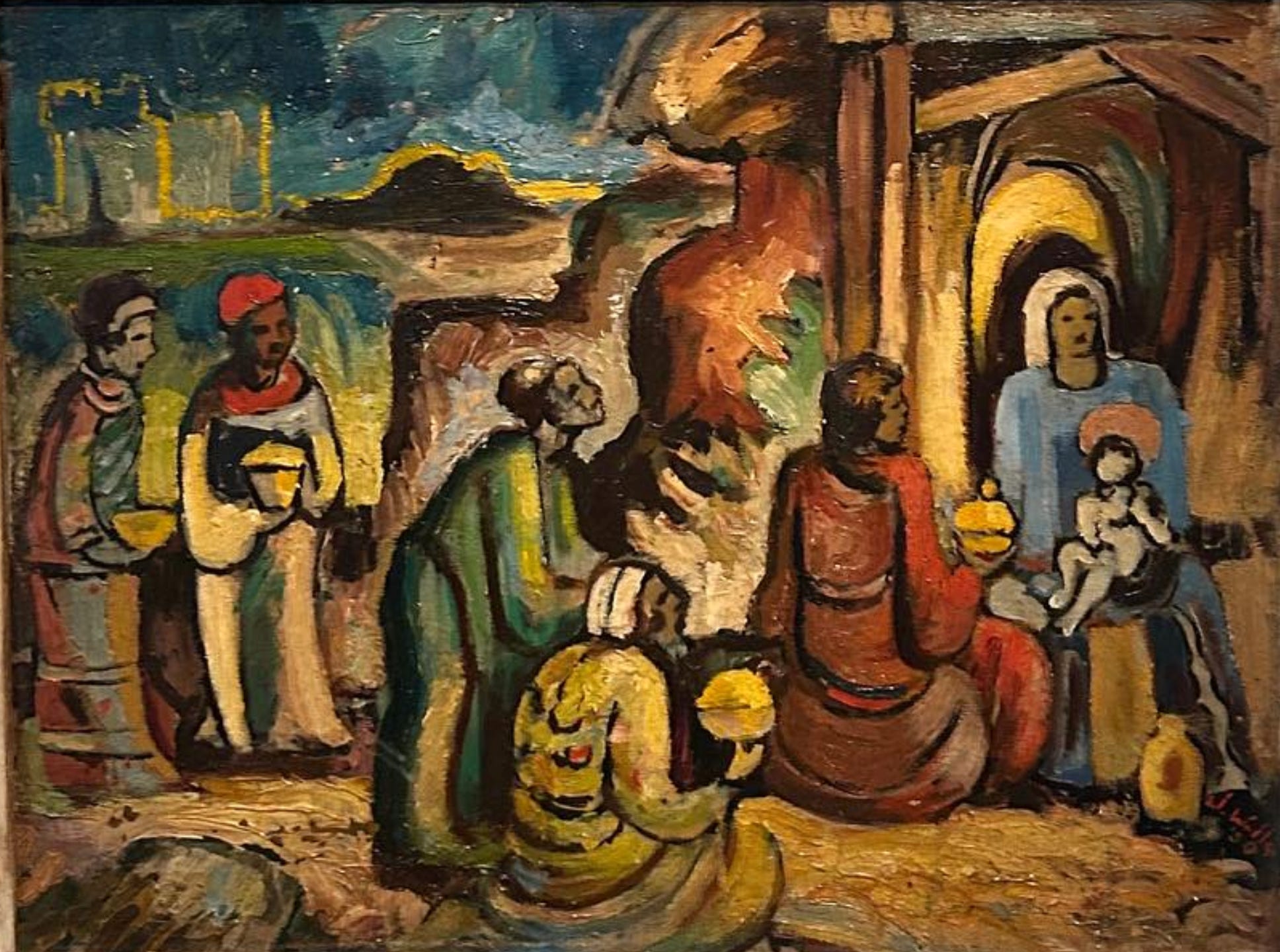
James Lesesne Wells, “The Adoration of the Magi” (1950)
Tillich argues that any interpretation of history (even ostensibly secular interpretations) must move between two poles, one rational/philosophical and the other value-laden/religious. He illustrates the point with references to popular world-historical systems from the nineteenth century, all of which combined rational description with quasi-religious meaning.
As Hegel called the place at the end of philosophy the “place of truth”, so Marx thought that the proletariat occupies this favored position, and the psychoanalyst attributes it to the completely analyzed personality, and the philosopher of vitalism to the strongest life, to the process of growth, to an elite or a race. There are, according to these ideas, favored moments and positions in history when truth appears, and reason is united with the irrational. There are moments, as I myself emphasized on different occasions, in which “kairos,” the right time, is united with “logos”, the “eternal truth”, and in which the fate of philosophy is decided for a special period.
However, Tillich worries that sweeping interpretations of the March of History have fallen out of fashion, replaced by “a secularized and emptied autonomous culture” defined by arbitrary forms of personal freedom and equally arbitrary exercises of power. Modernity leaves us with a disenchanted vision of time, lacking purpose or divine presence.
A similar critique of “objective” (but really, nihilistic) history appears in Friedrich Nietzsche’s “On the Use and Abuse of History for Life” (1874). From Nietzsche’s point of view, the illusion of objectivity can only result in a denial of life (which he associates with Arthur Schopenhauer’s Buddhist-tinged pessimism, and which is visible today in the self-abnegating moralism and “politics of guilt” of many left-wing causes) or in rational systems of control (in which historical “laws” become determinative of value and political action; see Hegel and Marx above).
For Tillich, as for Nietzsche, our yearning for historical meaning cannot be satisfied through political or philosophical systems. Instead, “the relation of the conditioned to the unconditional” must play out at the level of the individual life, where “the difference between philosophy and theology decreases.” “The finite life is either turned toward the infinite,” he writes, “or turned away from it toward itself.” Thus, like Nietzsche (but in a distinctly transcendent sense), kairos requires an embrace of fate. “Fate obtrudes,” Tillich writes,
even into the sacred enclosure of philosophy, into the truth itself, and it stops only before the holy of holies. It stops only before the certainty that fate is divine and not demonic, but it is meaning-fulfilling, and not meaning-destroying….This eternal truth, this logos above fate, is not at man’s disposal; it cannot be subjected, as Hegel thought it could, to the processes of human thinking; it cannot be described or presented as the meaningful world process. To be sure, this eternal logos does pulsate through all our thinking; there can be no act of thought without the secret presupposition of it’s unconditional truth. But this unconditional truth is not in our possession. It is the hidden criterion of every truth that we believe we possess. There is an element of venture end of risk in every statement of truth. Yet we can take this risk in the certainty that this is the only way in which truth can reveal itself to finite and historical beings.
In this shift to existential time Tillich offers something like a sacralized version of Henri Bergson’s “duration” or Martin Heidegger’s “Dasein”: a reality grounded in the plenitude of being, or what he calls “the depths of the soul.” As I have written before, it is this personal, inter-subjective perspective that allows for particular types of trans-historical sympathy and holiness in classroom learning.
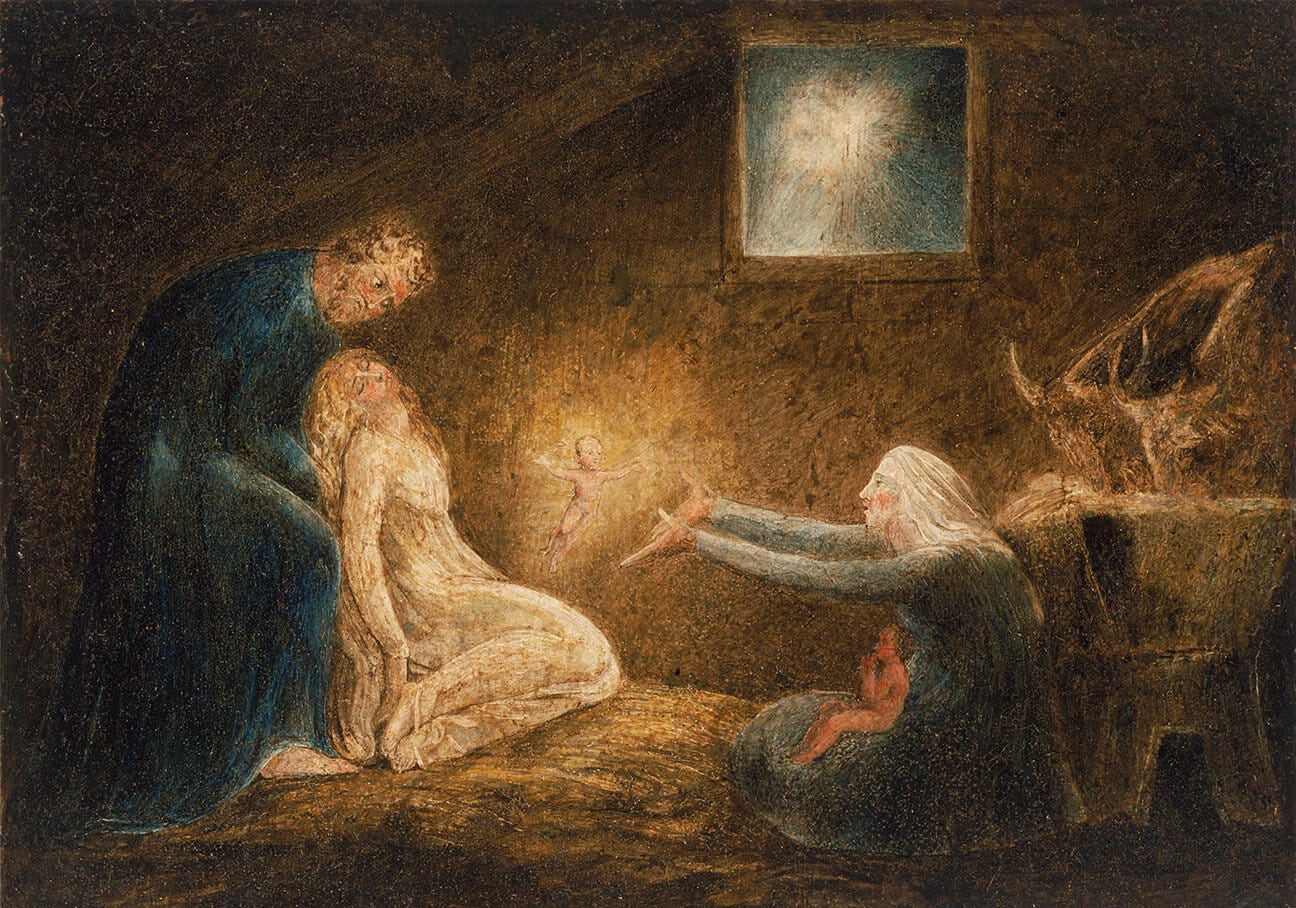
William Blake, “The Nativity” (1800)
It is noteworthy that Tillich’s “criterion of truth” emerges in the context of faith, which itself depends on the contingent and unrepeatable course of a human life. The same qualities underlie Hannah Arendt’s discussion of “natality” (the second Christmas concept). Writing in the wake of Nazism and Stalinism, Arendt was very worried about the eradication of difference under the influence of mass media and totalitarian regimes. As she describes it, political freedom depends on “the birth of new men and the new beginning, the action they are capable of by virtue of being born. Only the full experience of this capacity can bestow upon human affairs faith and hope, those two essential characteristics of human existence which Greek antiquity ignored altogether.” It is the radical newness of children that (to borrow from Emerson) makes infancy "the perpetual messiah.”
Thus, perhaps unexpectedly, Arendt concludes The Human Condition (1958), her magnum opus on philosophy and political science, with a simple but beautiful reference to the nativity: “It is this faith in and hope for the world that found perhaps its most glorious and most succinct expression in the few words with which the Gospels announced their ‘glad tidings’: ‘A child has been born unto us.’”
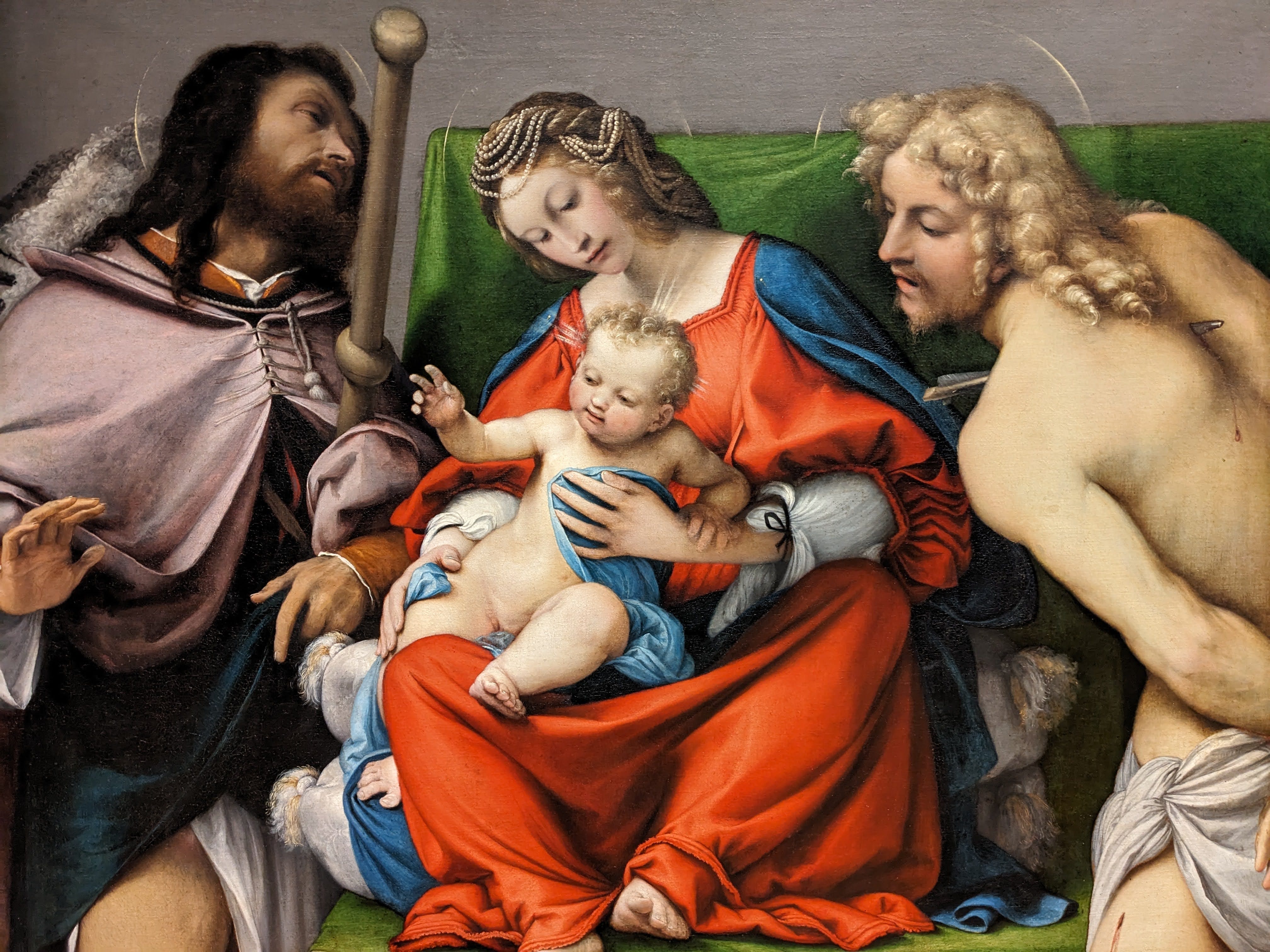
Lorenzo Lotto, “Madonna and Child with St. Roch and St. Sebastian” (1518)
In both respects, Christmas offers a return to “the fullness of time”: a vision of human history imbued with divine significance, in which our actions constitute a shared reality (not only with each other, as in Nietzsche and Arendt, but as in Tillich, with God himself). These are the themes that my current project explores, that frame my favorite Christmas album of recent years, and that become clearest in the heightened experience of art.
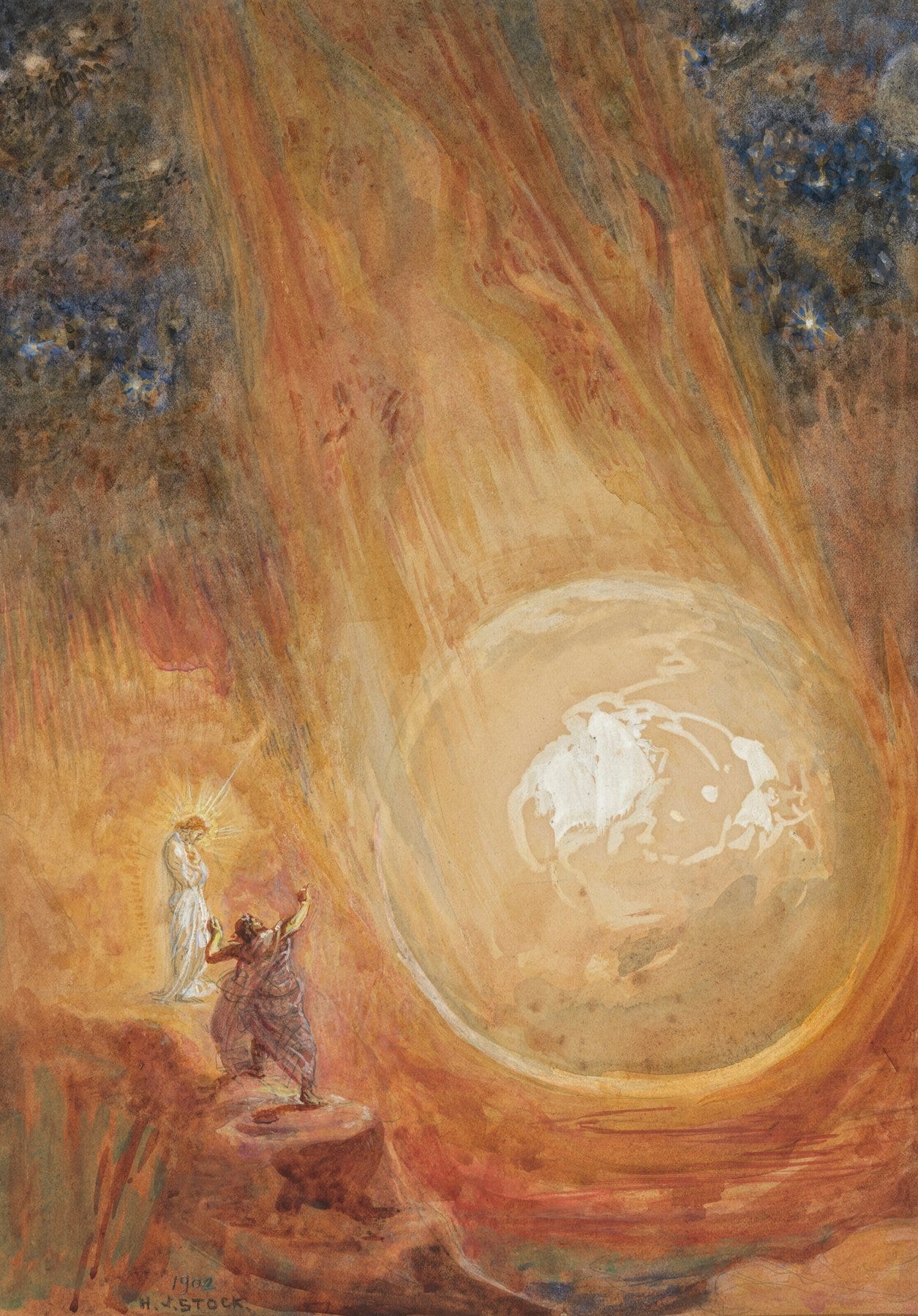
Henry John Stock, “And I Saw a Star Fall from Heaven Unto the Earth” (1902)